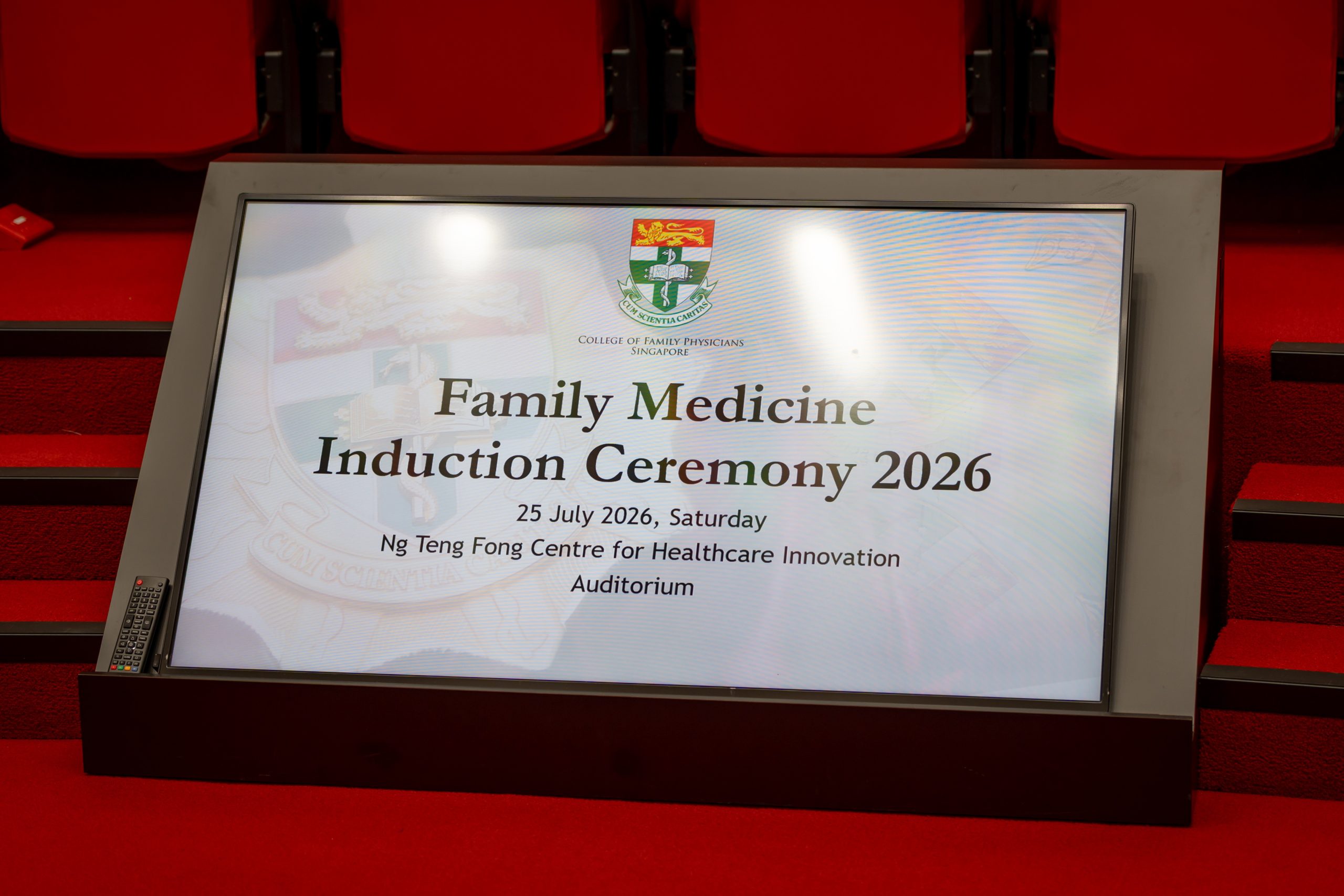
Family Medicine Induction Ceremony 2026
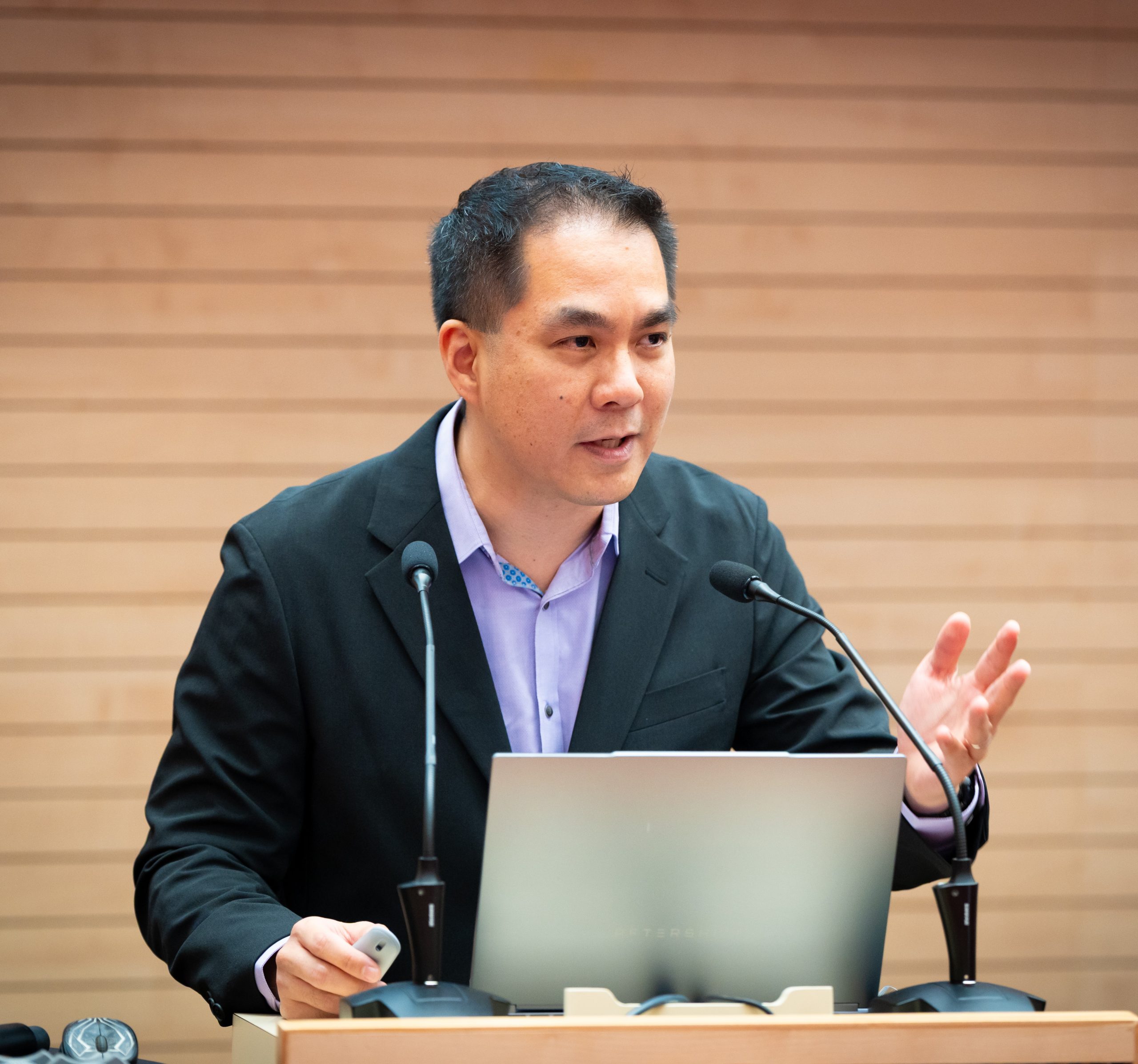
Speech by Guest-of-Honour, A/Prof David Tan
Dr Wong Tien Hua, President of the College of Family Physicians Singapore;
College Council;
Programme Directors;
Colleagues; and most importantly, our incoming Family Medicine trainees,
Good afternoon, and welcome.
It is a privilege to be here today as your Guest-of-Honour, and I want to begin by saying something simple but sincere: congratulations. For those who are embarking on the Graduate Diploma in Family Medicine, congratulations on starting your journey in Family Medicine. For those embarking on the Masters of Medicine and Fellowship programme, you have taken a big step towards being recognised as someone who is proficient or specialist in Family Medicine. You all have chosen one of the most meaningful paths in medicine. That choice deserves to be celebrated.
Not too long ago, Family Medicine was sometimes seen as the quieter cousin of the hospital specialties. A general practitioner was the doctor you visited for cough and colds, or for a subsidised referral. That perception has changed, and it has changed because of deliberate, sustained efforts by the College, by the Ministry of Health, by the medical schools, and by thousands of family physicians who believed that primary care deserved better.
Let me briefly take you through some of that journey. Over the years, we have put in place a range of schemes to support primary care—from the Chronic Disease Management Programme, which brought structured, subsidised care for conditions like diabetes and hypertension into the community, to the Primary Care Networks, which gave private GPs a framework to collaborate, share resources, and care for patients more comprehensively. These were not small administrative changes. They represented a shift in how Singapore thinks about healthcare—that good care should begin in the community, close to where people live, and that the family physician is central to that vision.
Then came HealthierSG — perhaps the most significant transformation in primary care in a generation. For the first time, we are asking Singaporeans to enrol with a regular family physician, to build a longitudinal relationship with someone who knows them, their history, their family, and their circumstances. This is not just a policy shift; it is a philosophical one. It says that healthcare is not just about treating illness—it is about knowing people.
Our polyclinics have grown in tandem, expanding their capacity and capabilities, and increasingly working alongside private GP partners rather than in parallel. Our modern polyclinics are well-equipped and well-run, and often a destination for visitors both overseas and locally looking to improve their own systems and processes. For some of us perhaps in private practice who have not had the opportunity to visit a modern polyclinic, I’m sure your journey in your courses will open up opportunities to have a tutorial in a polyclinic.
The recognition of Family Medicine as a specialty in its own right has given the profession the standing it deserves—our Family Medicine Specialists who have completed their advanced training in Family Medicine, be it the Fellowship programme or in future the advanced FM programme, are not generalists by default, but specialists by choice, with a distinct and sophisticated body of knowledge and skill.
This recognition of additional training does not just apply to our Family Medicine Specialists. By 2030, all Healthier SG clinics will be required to have at least one unique GP who is practising in the clinic registered with the SMC as a family physician in the Register of Family Physicians. This gives recognition to the additional training that our FPs on the register have gone through, whether through the GDFM or MMed(FM) programmes, and gives assurance to our patients that their GPs are adequately skilled to manage their health holistically under Healthier SG.
Indeed, the most exciting chapters may still be ahead of us.
We are working on the next evolution of Primary Care, which will deepen support for GPs, strengthen care teams, and make it easier for family physicians in private practice to deliver the kind of comprehensive, coordinated care that their patients need. We want to make sure that choosing to practise in the community is not just professionally fulfilling, but practically sustainable.
We are also expanding Medisave limits to give patients greater ability to use their savings for outpatient care, and broadening the list of conditions under the Chronic Disease Management Programme. These changes are designed to reduce the financial barriers that sometimes stand between patients and the care they need — and to ensure that your work as a family physician is appropriately recognised and supported.
Beyond the clinic walls, we are investing in stronger connections between family physicians and community partners—social service agencies, community health teams, and voluntary welfare organisations. This is because we know that health is shaped by far more than what happens in a consultation room. Housing, loneliness, financial stress, caregiver burden — these are the realities your patients live with, and the family physician of tomorrow will need to navigate these with skill and compassion.
In addition, technology will play an increasingly important role. From digital health records to AI-assisted decision support, the tools available to you will continue to evolve. I encourage you to embrace these not as replacements for the human relationship at the heart of Family Medicine, but as instruments that free you to do what only you can do — to listen, to understand, and to care.
I want to take a moment to speak honestly to those of you who are considering, or have already decided, to enter private practice.
Private practice can be deeply rewarding. The autonomy, the continuity of care, the relationships you build with families over years and decades — these are gifts that few other careers can offer. I have met GPs who have cared for three generations of the same family, who were present at births and at deaths, who were the first call in a crisis, and the steady hand through chronic illnesses. That kind of medicine is profound.
But I would be doing you a disservice if I did not also say this: private practice is not without its difficulties. Running a clinic is running a business. There are operational pressures, administrative burdens, and financial uncertainties that your training will not fully prepare you for. The landscape is competitive, and the expectations of patients are rising. Decisions best made for patients, such as using subsidised drugs, may not always be the best for your business, and tough choices will need to be made.
I am not saying this to discourage you. I am saying it because I want you to go in with your eyes wide open. Seek mentors who have walked this path. Ask the hard questions before you sign a lease. Build your networks early. And know that the Ministry, the College, and the broader primary care community are working hard to make the environment more supportive — but that support works best when you are prepared to receive it.
Whichever path you take — polyclinic, private practice, academia, or some combination — I want to spend a moment on something that I think deserves more attention than it often gets.
You will hear a great deal, in the years ahead, about value-based care. It is the language of health systems and health economists — care that is measured by outcomes, that rewards quality over quantity, that aligns incentives with what actually makes patients healthier. It is an important idea, and we in the Ministry think about it a great deal.
But today, I want to talk to you about something slightly different. I want to talk about values-based care — and yes, the pun is very much intended.
Because, before you can deliver value to your patients, you need to be anchored in your values. And I worry that in the busyness of training, in the pressure to pass examinations and accumulate competencies, with the pressures of hitting KPIs or balancing your books, the deeper question of who you are as a physician can sometimes get lost.
Let me name some of those values explicitly.
Professionalism. This is more than turning up on time and dressing appropriately. Professionalism is the commitment to hold your patients’ interests above your own convenience, above commercial pressures, above the fatigue of a long day. It is the willingness to say “I don’t know” and to find out. It is the discipline to keep learning long after your examinations are done. In Family Medicine, where you will often be working without the immediate safety net of a specialist colleague down the corridor, professionalism is not a soft skill — it is a clinical one.
Patient-centred care. Again, this phrase gets used so often that it risks becoming lip service. But think about what it actually means. It means that when a patient sits across you, the consultation is not organised around your workflow, your template, or your time pressure. It is organised around their story, their concerns, their values, and their goals. It means asking not just “What is wrong with you?” but “What matters to you?” It means recognising that the patient in front of you is the expert on their own life, and that your clinical expertise is most powerful when it is placed in service of their priorities, not substituted for them. Be mindful, however, that this does not mean giving patients everything that they want or demand, but giving the patients what is best for them, according to your clinical assessment.
This is harder than it sounds. It requires you to slow down when the system is pushing you to speed up. It requires genuine curiosity about people—not just their symptoms, but their circumstances, their fears, their relationships. It requires, frankly, a kind of humility that medicine does not always cultivate.
Continuity of care. This is perhaps the value most distinctive to Family Medicine, and the one most at risk of being eroded by the pressures of modern practice. Continuity is not just about seeing the same patient twice. It is about the accumulation of trust over time — the kind of trust that allows a patient to tell you something they have never told anyone else, that allows you to notice a change that no algorithm would flag, that allows you to have the difficult conversation that needs to be had. Research consistently shows that continuity of care is associated with better outcomes, fewer hospitalisations, and higher patient satisfaction. But beyond the data, continuity is simply what makes Family Medicine *family* medicine. It is the thread that connects you to your patients across the seasons of their lives.
And underpinning all of these is something harder to name but no less real — a genuine care for people. Not patients as cases, not patients as data points, but patients as human beings who are vulnerable and trusting and deserving of your very best. That orientation — that fundamental disposition towards the person in front of you — is what will sustain you through the difficult days, and what will make the good days genuinely meaningful.
So, as you build your clinical skills, as you master the guidelines and the protocols and the prescribing, do not let the values get crowded out. They are not the soft backdrop to the real work of medicine. They are the real work of medicine. They are what will make you not just a competent, proficient, or expert physician, but a GOOD one.
Finally, I want you to know this: you are not alone.
You are joining a community — the College of Family Physicians Singapore, your fellow trainees, your programme directors, your future colleagues in PCNs and polyclinics and private clinics, and community hospitals across this island. This community has your back. It will challenge you, support you, and grow with you.
The College of Family Physicians and the Ministry of Health are committed to primary care. We are committed to you. The investments we are making — in infrastructure, in policy, in technology, in training — are investments in your future and in the future of your patients.
So as you begin, or continue on, this journey of Family Medicine training, carry with you the knowledge that what you are doing matters. That the patients who will walk through your door — sometimes frightened, sometimes confused, sometimes just needing someone to listen — will be better for having you as their doctor.
Welcome to Family Medicine. Welcome to one of the most important professions in Singapore’s healthcare system, and I look forward to seeing what each of you will go on to achieve.
Thank you.
Source: The College Mirror