CFPS-Mount Sinai Family Medicine Leadership Programme
by Dr Grace Chiang, Dr Bryan Lim, Dr Jonathan Yeo, Dr Tricia Chang, and Dr Ngai Qian Yi
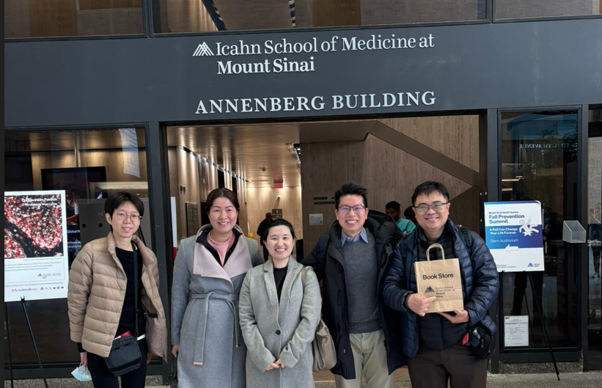
Our two-week attachment at Mount Sinai Hospital was an enriching and multifaceted experience that offered the five of us, each with varied interests, roles, and areas of practice, a unique opportunity to learn from one another while gaining insight into a different healthcare system and environment. The programme was thoughtfully designed to combine didactic learning with immersive clinical experiences, allowing us to explore not only advances in medicine, but also the broader forces shaping the future of healthcare.
The didactic component featured engaging sessions on leadership, artificial intelligence, and medical education, providing perspectives that extended beyond traditional clinical practice. Discussions on leadership highlighted the importance of adaptability, collaboration, and purposeful change in navigating an increasingly complex healthcare landscape. The sessions on artificial intelligence offered a glimpse into how emerging technologies might transform clinical decision-making, healthcare delivery, and the way clinicians work. Equally thought-provoking were the discussions on education, which explored how we can better prepare healthcare professionals and learners for a rapidly changing world.
The clinical programme complemented these sessions with full-day inpatient and outpatient postings across a diverse range of services such as longevity medicine, hospital medicine, Hospital at Home, home care, and concierge care.
Perhaps the most valuable aspect of this attachment was the opportunity to view healthcare through multiple lenses. Across the various settings, we saw how innovation, technology, clinical expertise, and patient-centredness can intersect to shape new models of care. For the five of us, the attachment was not simply an opportunity to observe another healthcare system, but a chance to reflect on our own practices, challenge existing assumptions, and consider how lessons from Mount Sinai Hospital could inspire meaningful improvements in our respective areas of work.
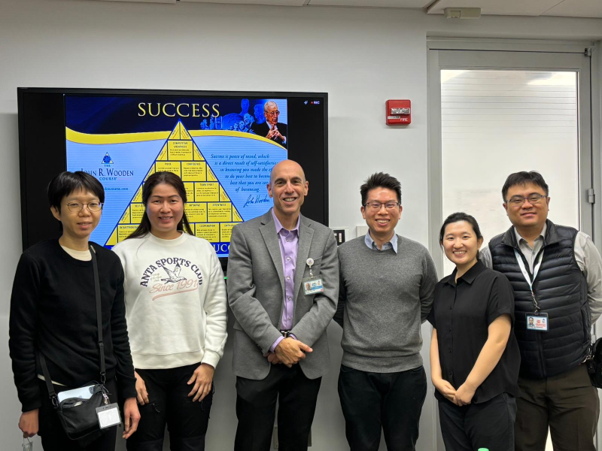
Leadership Programme Talk by Dr Andrew Dunn
Concierge Medicine: Lessons for Primary Care
One of the more thought-provoking components of the CFPS-Mount Sinai Family Medicine Leadership Programme was the visit to Mount Sinai’s Hudson Yards practice. The concierge model operates within a very different healthcare and financing environment from Singapore, but it provides an interesting perspective on how primary care can be organised around continuity, accessibility, and coordination.
With more time allocated to each patient, consultations can extend beyond addressing an immediate complaint to consider the patient’s broader medical needs and priorities. Greater continuity also allows the primary care physician to maintain oversight when several specialists are involved. These principles are familiar to Family Medicine, but the Hudson Yards model demonstrates what they can look like when the surrounding service is deliberately structured to support them.
There are clear limitations to direct comparison. Concierge medicine serves a particular patient population and is relatively resource-intensive. Replicating such a model across Singapore’s primary care system would therefore neither be straightforward nor necessarily appropriate.
The more relevant consideration is whether selected principles can be applied more broadly. Longer consultations for patients with greater medical complexity, stronger continuity with a regular family physician, and better coordination across healthcare providers may offer value without requiring adoption of the concierge model itself.
The Hudson Yards experience therefore offers a useful service-design perspective. High-quality primary care depends not only on the capabilities of individual physicians, but also on whether healthcare systems provide sufficient time, continuity, and supporting structures for comprehensive care.
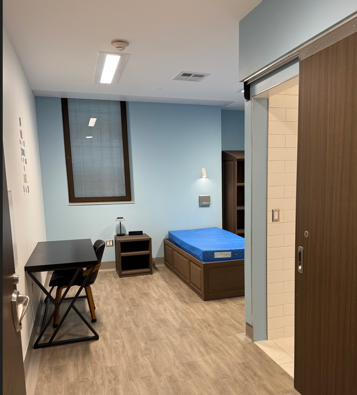
A room at the Intensive Crisis Residence
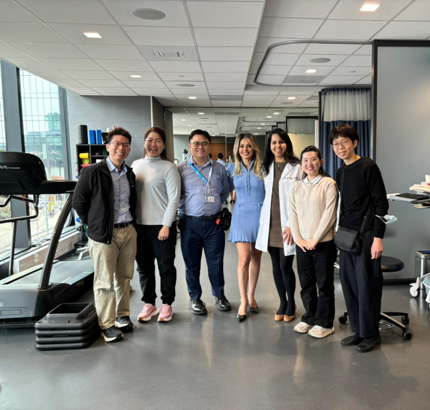
With the Hudson Yard's team
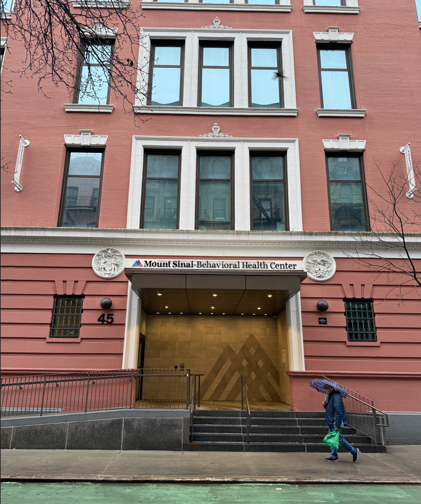
Mount Sinai Behavioural Health Center
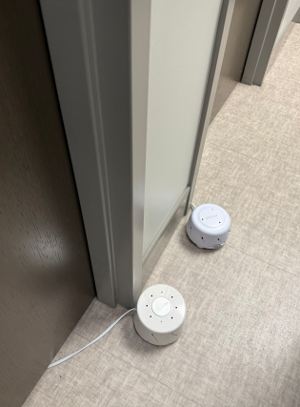
White noise machine
Mental Health: For Both Patients and Providers
Primary care physicians are often the first point of contact for patients with mental health issues and help to coordinate care to support these patients. Mount Sinai has a new Behavioural Health Centre that has integrated outpatient clinics and an inpatient psychiatric ward within a building. This serves as a one-stop service for community psychiatry patients.
An interesting part of this hospital is that there is a section called “Intensive Crisis Residence”. One of the first to be offered in New York State, the Intensive Crisis Residence is a short-term alternative to psychiatric hospitalisation. Patients are taken care of by peer counsellors, social workers, nurses, and doctors, but in a home-like environment. This program is a safe alternative to going directly home after an inpatient psychiatric hospitalisation, so that patients can have more time to safely adjust to being in the community.
We also learnt that they take patient privacy and confidentiality very seriously. White noise machines are placed outside every consultation room to ensure privacy and confidentiality.
There is also a strong support for staff and employees. The Centre for Stress, resilience, and personal growth (started during Covid-19) offers confidential and individualised support to staff and eligible dependents. Using proven strategies, they help individuals build resilience and navigate life’s challenges with confidence. Throughout Mount Sinai’s sites in New York City, there are “Wellness spaces and Recharge rooms” for staff and employees to rest and practise self-care. Resources like the Louis Armstrong Centre for Music and Medicine, and Mount Sinai Calm, are also available for activities related to music, art, meditation etc. Music therapy for anxiety, pain management, and singing groups for stroke patients are some of the services available.
The Office of Wellbeing and Resilience conducts leadership workshops, mindfulness sessions, and coaching sessions to empower team members to build on their inherent strengths, finding meaning and cultivating realistic optimism.
Our main takeaways from this behavioural health observership were that Mount Sinai places a large emphasis on mental health among employees and shows commitment to their community partners by offering extended hours, having the Intensive Crisis residence available for anyone who needs it no matter where they are referred from. We also note that they have a specialised clinic and department just for substance use, which shows the multi-faceted burden of substance abuse on society—it affects health, economics, and social cohesion, not to mention it being the leading cause of preventable death. Singapore is fortunate that we have very strict drug laws, which is a cornerstone of our public safety strategy designed to keep the country relatively drug-free.
Home-Based Care: Same-same but Different
We had the pleasure of visiting the home-based programmes at Mount Sinai, Hospital at Home and Visiting Doctors. This is akin to our Mobile Inpatient Care@ Home and chronic home care services respectively. Underpinning their programmes was a strong belief that being at home is best for patients as well as a desire to reduce the load on overcrowded hospitals.
We were impressed by the range of services that could be offered, including radiological investigations and intravenous infusions. We reflected that widespread use of point-of-care ultrasound at home can improve our ability to diagnose and manage within the home setting. This would reduce the need for homebound patients to return to the hospital for care.
However, one striking difference was a lack of a multidisciplinary team within their Visiting Doctors programme. Allied health services such as nursing procedures and home therapy had to be outsourced to external procedures. The advantage of having a multidisciplinary team to manage patients holistically cannot be overstated. We in Singapore are able to systematically develop comprehensive care plans using a biopsychosocial approach via regular multidisciplinary team meetings and can easily communicate with one another when the patient’s condition changes. Additionally, home care being largely nurse-led in Singapore, compared to a physician-led service at Mount Sinai, promotes coordinated and value-based care.
Nevertheless, physicians at Mount Sinai do their best to work around limitations, such as reaching out to external providers to discuss patient care. It is heartening to know that regardless of location, home-based doctors share the same ethos of providing patient-centred care.
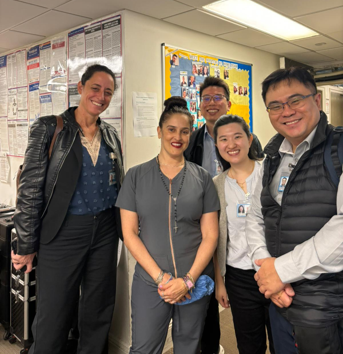
A day with the Hospital at Home Team
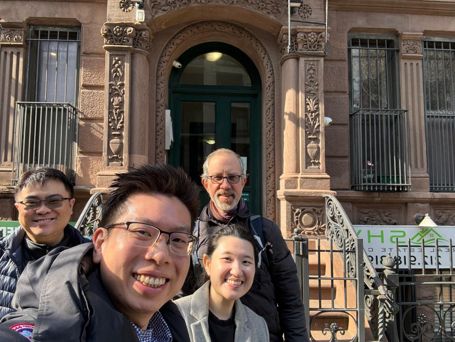
A day with a Home Care Doctor
Longevity Medicine: Reimaging the Future of Healthcare
Our attachment at the Mount Sinai Hospital offered a unique opportunity to step beyond the traditional disease-focused model of healthcare and explore a more proactive approach to healthspan and healthy ageing.
A key highlight was gaining insight into the hospital’s longevity research initiatives, such as its DigiTwin project, which seeks to harness advanced technologies and personalised data to better understand and influence the trajectory of ageing. It uses big data modelling to answer novel clinical questions, and research into novel AI-driven models of human health by pioneering the development of a Digital Twin Model. This model is powered by AI and real-time health monitoring to provide personalised insights to extend healthspan.
We were also introduced to a range of assessments and devices used in longevity medicine to evaluate physiological function and biological health, providing a more comprehensive picture of an individual’s health beyond conventional clinical measures. Experiencing these assessments first-hand, including undergoing a cardiopulmonary exercise test (CPET), was particularly memorable. It provided a practical appreciation of how objective measures of cardiorespiratory fitness and physiological reserve can contribute to a more personalised approach to preventive healthcare.
The attachment also demonstrated that medicine extends well beyond the walls of the clinic. The rehabilitation department—which also looks into longevity medicine in terms of how it might affect athlete healthspan and performance—works together with external partners to offer cold plunge and sauna therapies. This provided an opportunity to explore emerging approaches to recovery, resilience, and metabolic health, while considering their potential role alongside established preventive strategies.
What stood out was the hospital’s emphasis on bringing together research, technology, clinical assessment, and lifestyle interventions to create a more individualised model of care. The experience provided not only an introduction to the science and tools shaping the future of longevity medicine, but also a thought-provoking perspective on how healthcare can evolve from treating disease to proactively preserving function, optimising wellbeing, and ultimately helping individuals live healthier, more fulfilling lives for longer.
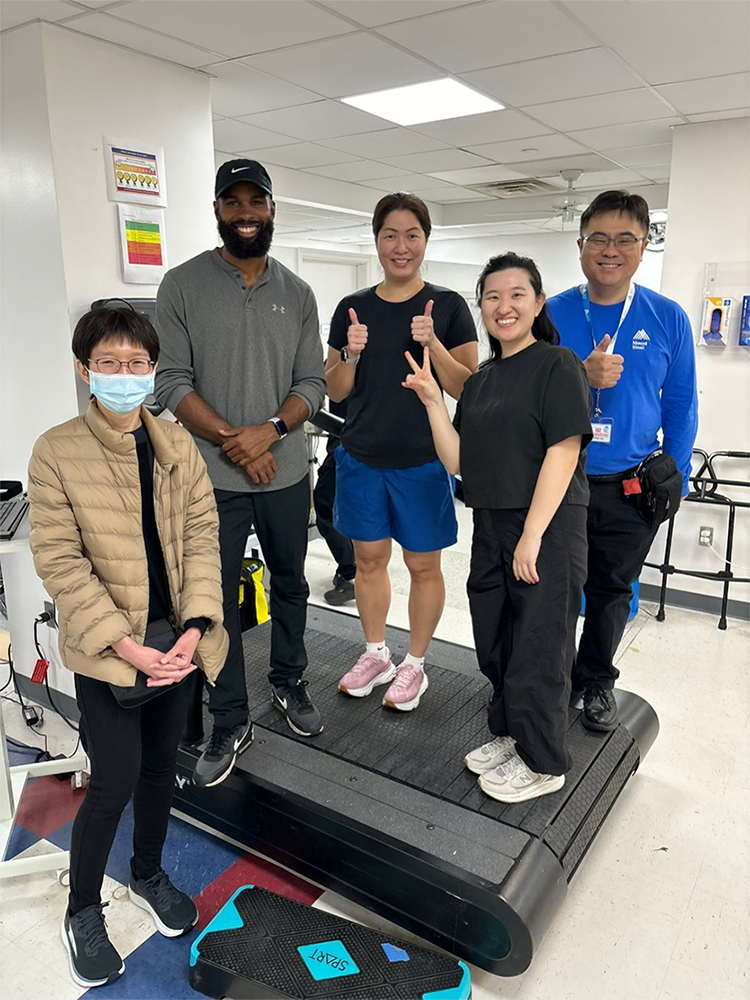
With Christopher Miller, Performance and Reconditioning Specialist at Mount Sinai Hospital
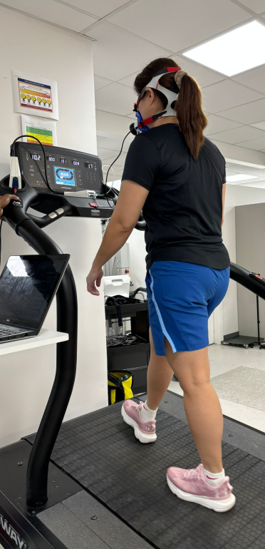
Dr Tricia Chang undergoing a cardiopulmonary exercise test (CPET)
Value-Based Care: The Sinai Approach vs Singapore’s Focus
Our team had several opportunities to learn from Sinai administrators and senior ambulatory care physicians on how value-based care (VBC) has been embraced and established within their healthcare system, as opposed to the usual fee-for-service model that many other institutions still adopt.
In 2015, Sinai launched VBC as a population health initiative to compensate their primary care providers for their team-based care and coordination whilst optimising patient care outcomes. They largely showcased VBC as a healthcare delivery and payment model that ties provider compensation to the health outcomes achieved for patients, relative to the cost of care. One example of this delivery method was through the Hospital at Home model, which we described earlier.
In the ambulatory setting, several quality indicators were identified and tracked annually as process improvement metrics, e.g., hypertension and diabetic patients treated to target; diabetic patients who performed their annual retinal photography and screened for proteinuria; patients who were screened for breast & colorectal cancers and depression; and appropriate use of statins amongst high cardiovascular risk patients. These same patients were also tracked to see if the outcomes translated to lower emergency room visits and hospitalisations.
Besides having a robust electronic medical records system (EPIC) that could track these metrics longitudinally, we noted that the system also incorporated comprehensive measures to ensure that only appropriate measurements were tabulated. For example, patients who would not benefit from statin use (such as those with terminal illness) or were statin intolerant were appropriately coded and excluded from the count.
Whilst incentivisation appears to be the main lever that drives this approach, it is merely a means to an end. Back home, we note that the Ministry of Health, Singapore, has similarly begun systemically embracing this concept, albeit in a more wholistic manner, named as the Appropriate and Value Based Care (AVBC) approach, since 2025.
This movement ensures that every patient receives care that is both clinically-effective and personally meaningful to their health journey, by focusing on evidence-based care, patient-centred care, and preventative care. This is achieved through ensuring that care is right-sited, integrated, and coordinated, yet cost-effective and sustainable. For the primary care sector in Singapore, we see this largely being achieved through Healthier SG objectives, although the system is still treading cautiously to fine-tune the approach.
Closing Thoughts
Beyond the knowledge and insights gained, perhaps one of the most memorable aspects of our two-week attachment was the camaraderie that developed among the five of us. Although we came from different roles, backgrounds and areas of interest, the shared experience created many opportunities to learn from one another, exchange perspectives and discover common ground. From navigating a new hospital environment and moving between different clinical services to sharing meals, conversations and reflections at the end of each day, these moments strengthened our bond and made the experience more meaningful.
As we look back on our observership at Mount Sinai Hospital, we leave with more than new knowledge and ideas. We return with a broader perspective of what healthcare can be—more connected, innovative, personalised, and responsive to the changing needs of patients and communities. The observership challenged us to think beyond our individual practices and consider how leadership, technology, education, and new models of care can come together to shape the future of healthcare. Most importantly, it reminded us that while professional development may bring us together, it is the relationships, shared experiences, and friendships formed along the way that often leave the most enduring impression. Our two weeks at Mount Sinai Hospital may have come to an end, but the lessons, inspiration, and bonds forged during this journey will undoubtedly stay with us well beyond the observership.
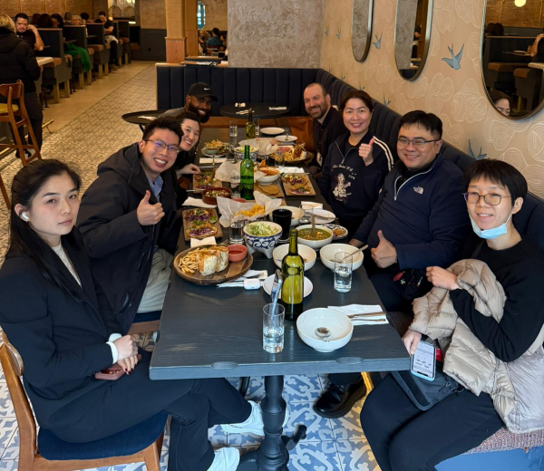
Lunch with the Mount Sinai Team

Team bonding
Source: The College Mirror