CFPS Induction 2025
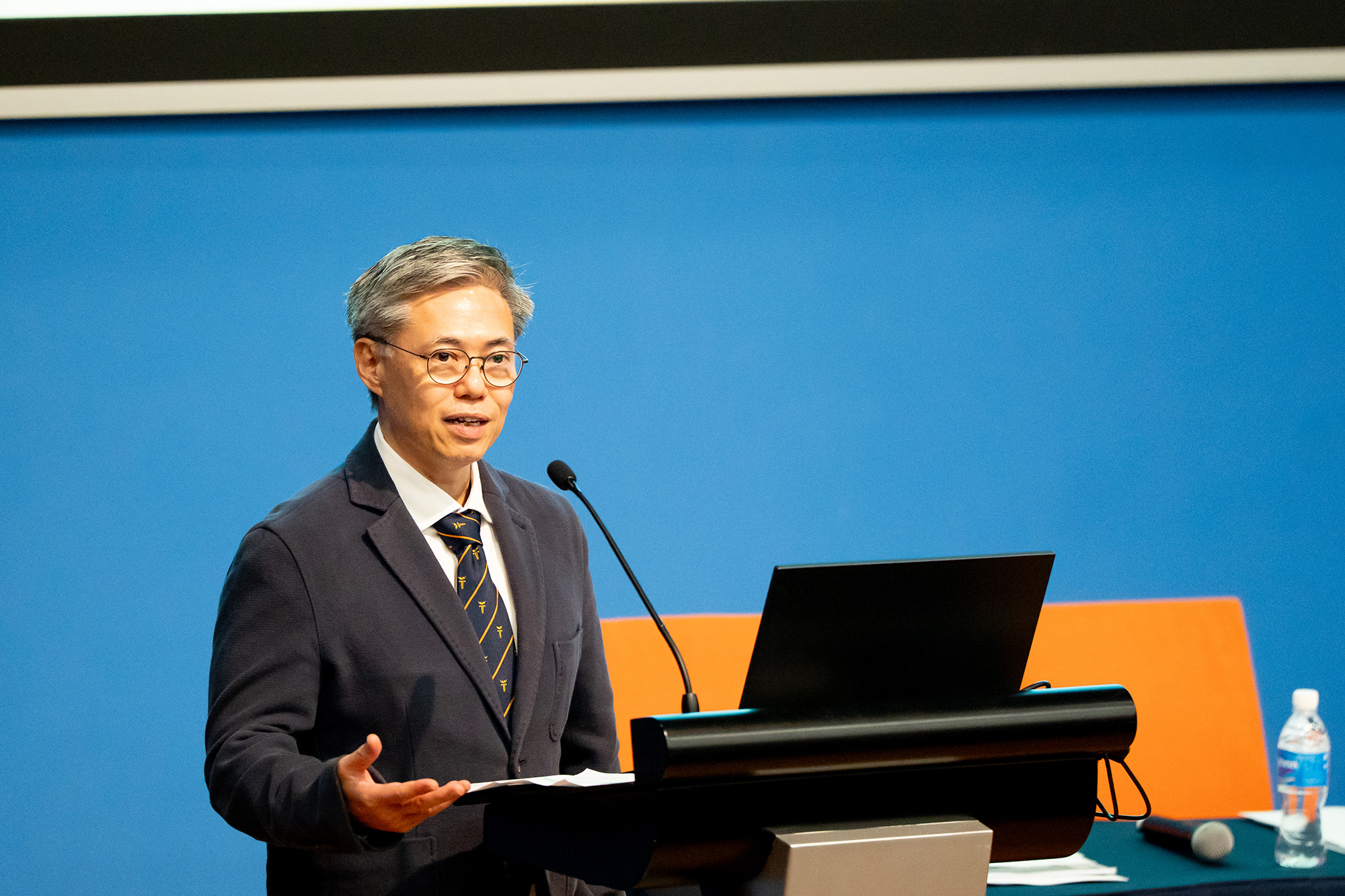
Speech by A/Prof Clement Tan, Director, Division of Graduate Medical Studies
Dr Wong Tien Hua, President of the College of Family Physicians, Council Members, faculty, mentors, friends, and most importantly, our new Family Medicine trainees.
Thank you for this tremendous privilege of joining you today to mark the beginning of your journey into the MMed (FM) and GDFM programmes.
It is a little over 30 years ago that I did a posting as a first-year Medical Officer at the Woodlands Polyclinic. This was just before returning for National Service. At that time, SAF had determined that fresh graduates just didn’t have the ability to function as medical officers in the army. We were familiar with hospital processes but had no real idea how to manage patients with minor illnesses like upper respiratory tract infections, diarrhoea, eczema, fungal rashes, etc. Hence, after housemanship, all the men due to return to the army were made to do a 6-month polyclinic rotation.
I must say I enjoyed that polyclinic posting. Woodlands at the time was still quite rustic and there was quite the kampung spirit in the area. The clinic attendant at the polyclinic used to pitch up periodically with Milo for the doctors at teatime.
Thirty years ago, Family Medicine was often seen as a default—not a destination. The system was largely reactive, and the care episodic. GPs worked in silos. Woodlands Polyclinic might have been new and less busy, but polyclinics in general were overburdened. Patients with chronic illnesses went from doctor to doctor without continuity. This despite the fact that there were many good GPs around who had great clinical skills and were managing their patients very well.
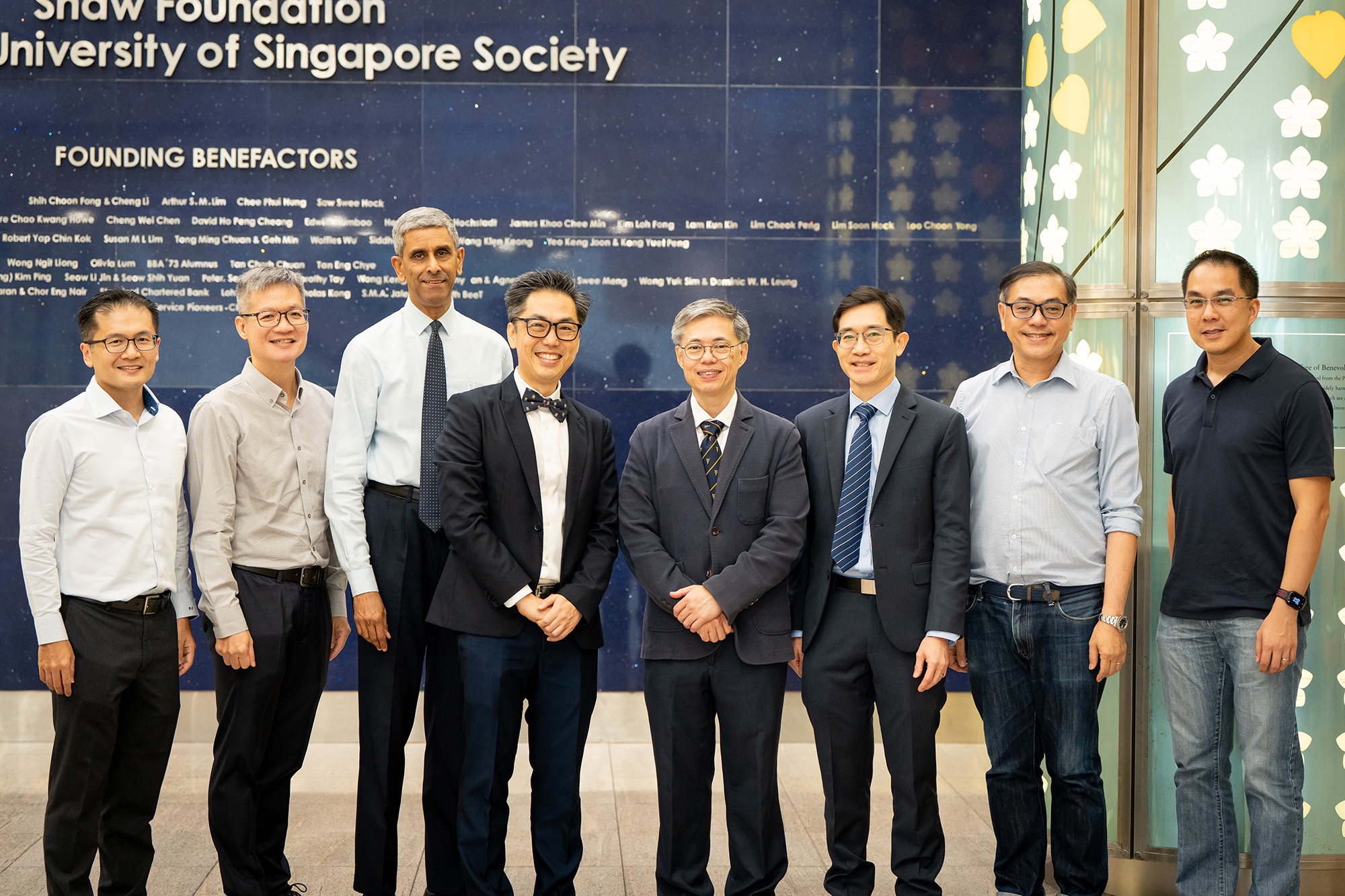
A/Prof Clement Tan with guests at Induction Ceremony 2025.
But 30 years ago was also the time when things were beginning to change. Formal training in Family Medicine had recently been introduced and the first Master of Medicine in Family Medicine examination was held in 1993. That same year, the College of General Practitioners was renamed the College of Family Physicians. Family Medicine was becoming a profession with rigour, scholarship, and system impact. More importantly, at a personal level, I was noticing classmates and seniors who were well regarded for their clinical acumen, industry, and grades in medical school, making a deliberate move to enter Family Medicine—taking up the Family Medicine traineeship, setting up group practices, starting their solo practices.
Over the years, I have watched with admiration the growth of Family Medicine as a discipline. Besides the polyclinics, there now are thriving group practices and Primary Care Networks that provide that continuity of care for chronic diseases. The system is now integrated and care is longitudinal instead of episodic. As an ophthalmology resident, I watched with fascination as the retina surgeons battled severe, blinding diabetic retinopathy. But gradually, the number of such complex surgeries started to decline. The real change that had happened was that Family Physicians were making a big impact on the control of diabetes and other related risk factors; they were consistently screening patients and working with the eye community to detect and treat early diabetic eye disease.
And that’s just the example that’s closest to me. There are many more examples of the impact that the professionalisation of Family Medicine has made.
When I came on board the Division of Graduate Medical Studies, I also started to notice that the training and exams for Family Medicine are very rigorous. The standards were as high as any of the other specialties. Family Medicine covers such a broad range of subjects, it really looks to me like the MBBS on steroids. But it does give me great confidence that those who pass through the GDFM and MMed(FM) programmes have been thoroughly trained and assessed and are going to be very competent in handling the increasingly complex healthcare needs of our ageing population. I have also watched many Family Physicians undertake further training in dermatology, geriatrics, palliative medicine, occupational medicine, mental health and so on.
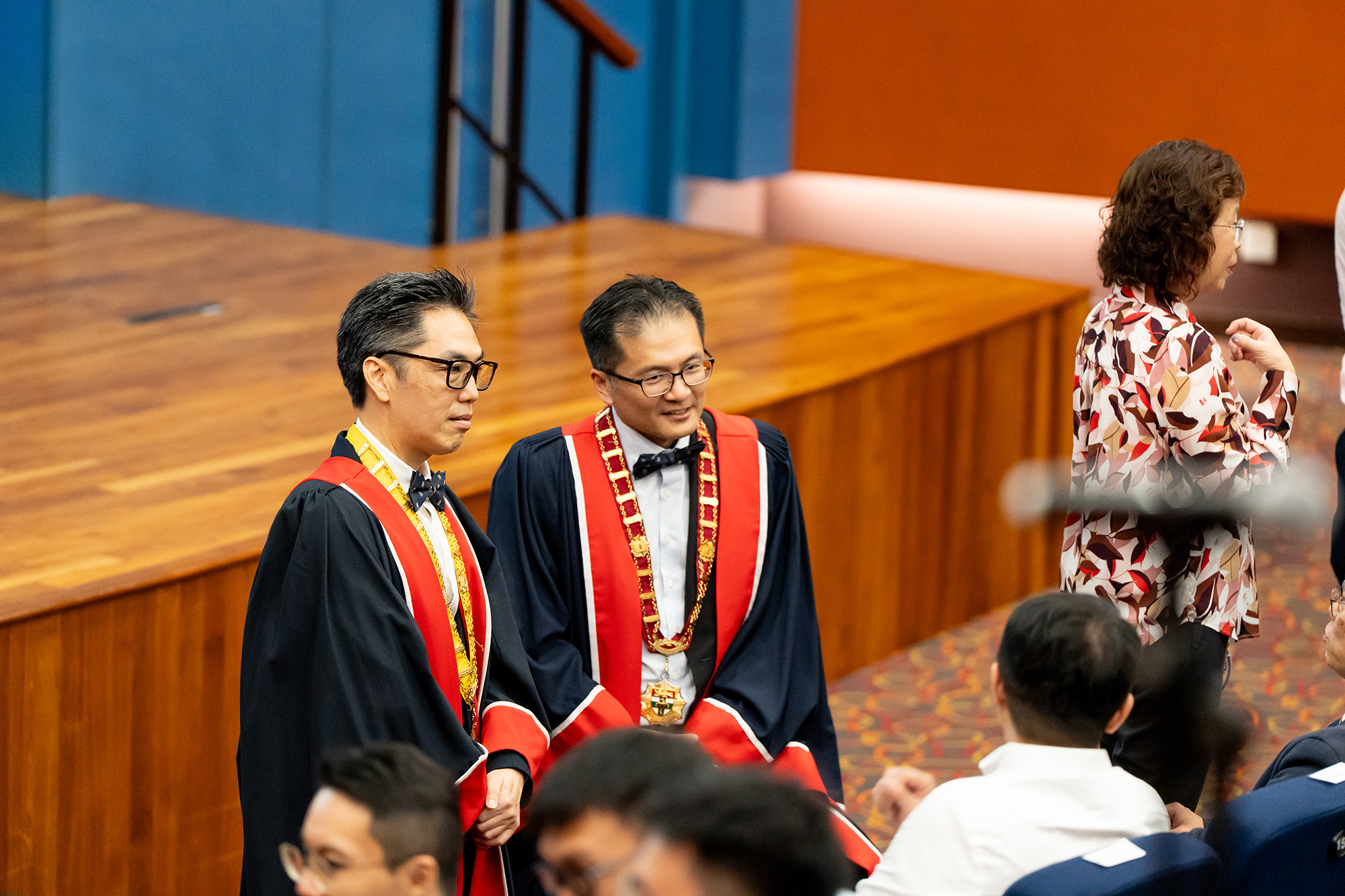
Dr Wong Tien Hua and Dr Darren Seah speaking with incoming trainees.
So, when it was mooted that Family Medicine should be recognised as a specialty of Medicine, I had no difficulty supporting that proposal. And I feel honoured to be part of the journey of Family Medicine. To see it succeed in this would (to borrow the words of a local politician) warm the cockles of my heart.
In closing, I have a few more words for the inductees into the GDFM and MMed Programmes:
You have chosen a good path. We will be relying on you to be the glue that holds an increasingly complex healthcare system together.
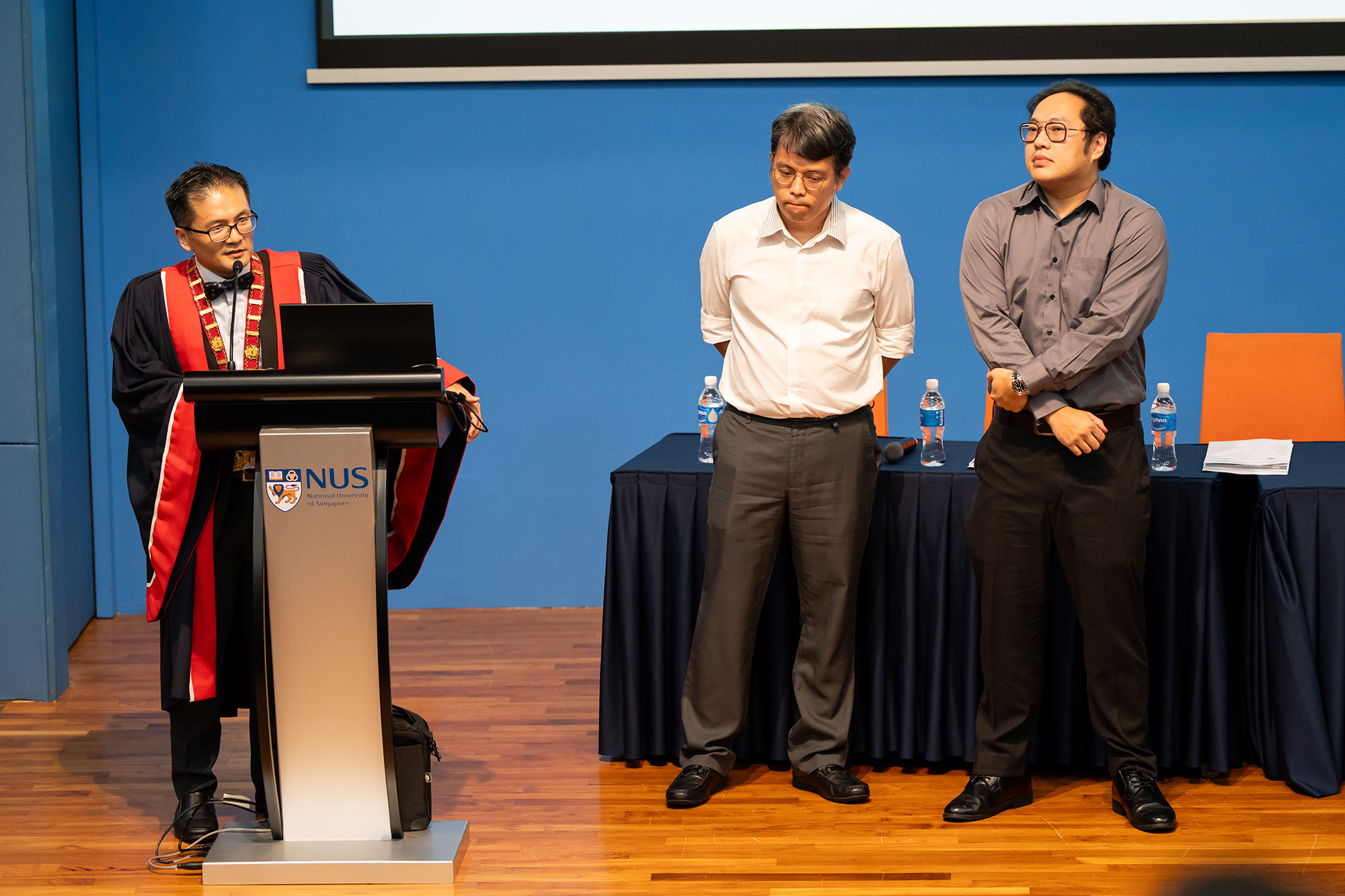
Dr Darren Seah (Censor-in-Chief) introducing the Programme Directors of the College academic programmes.
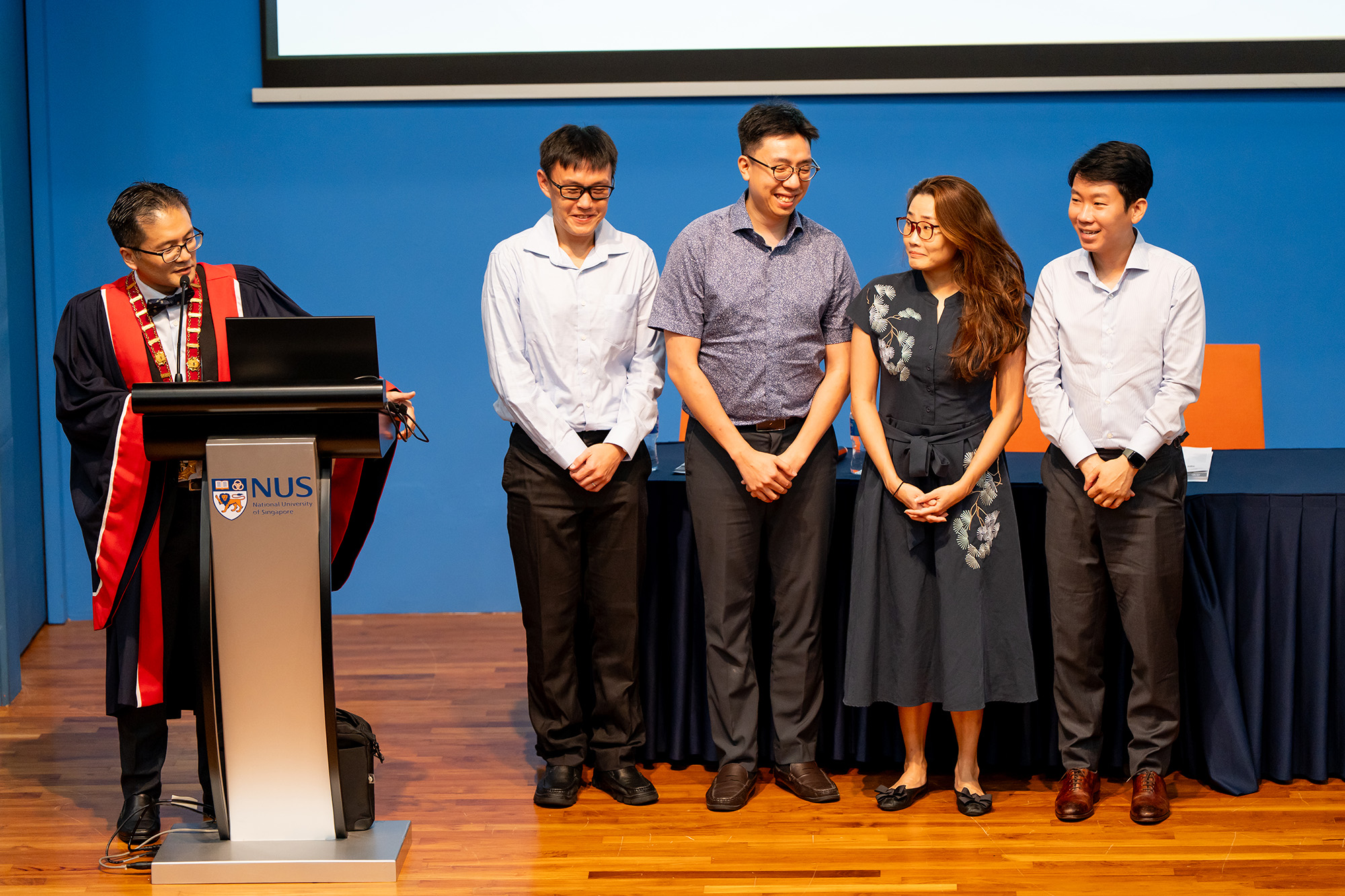
Dr Darren Seah (Censor-in-Chief) introducing the Programme Directors of the College academic programmes.
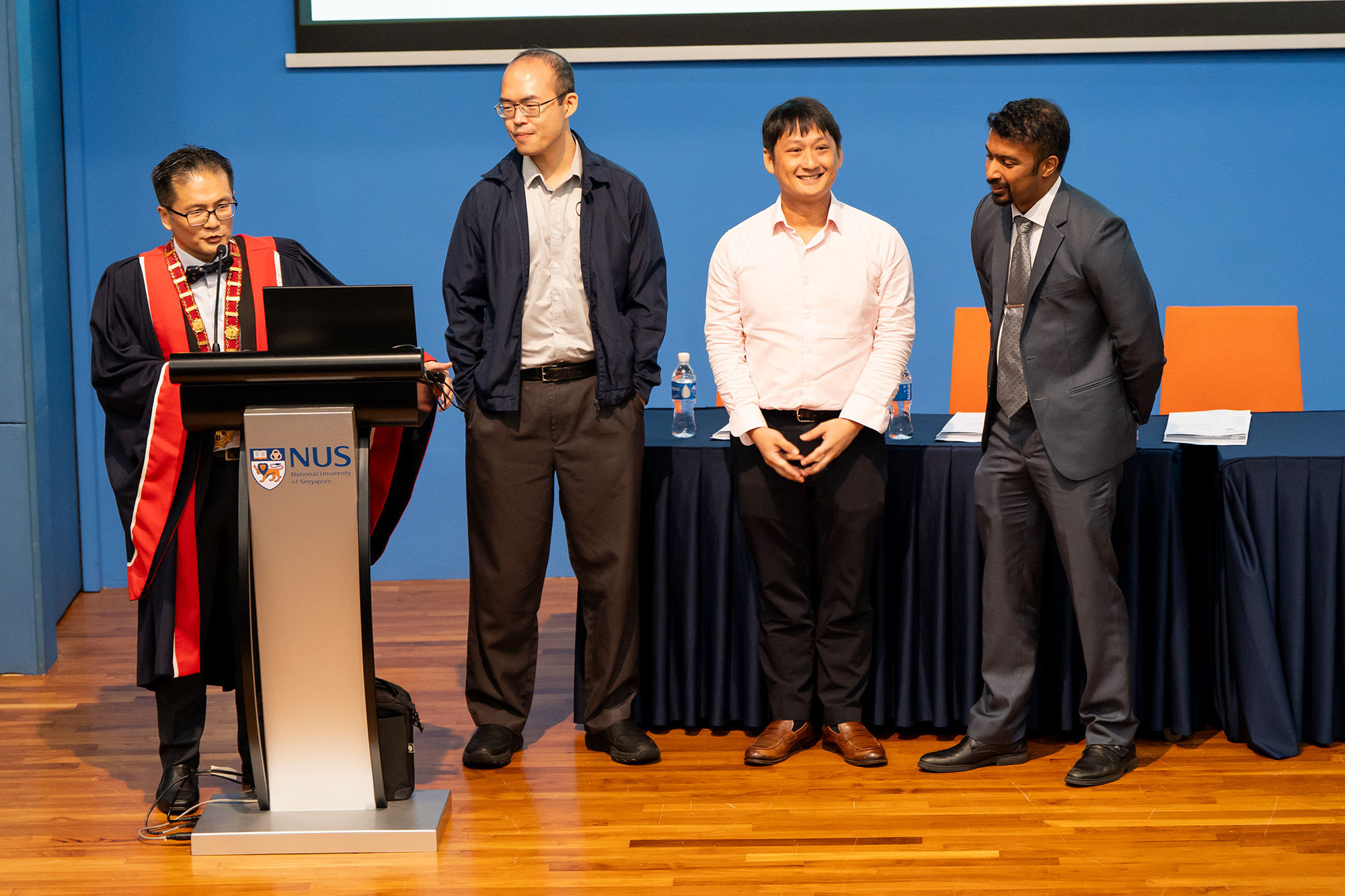
Dr Darren Seah (Censor-in-Chief) introducing the Programme Directors of the College academic programmes.
I have no doubt you will be well trained. Having worked with your programme directors and faculty, I can tell you that they are excellent individuals. They have signed up to do this to ensure that the training will be nothing short of excellent. They have selflessly invested time and effort into the programme. So, train hard. Build your knowledge and skills. But do not lose that for which Family Physicians had always been well regarded — that GP’s touch. That gradual and consistent building of good relationships with patients, being part of their lives, quietly influencing the community around you. Being the ones always present to provide care. Being the ones that the patients trust.
Congratulations on your induction. May your journey be rich with learning, marked by service, and grounded in the values that have always defined the very best of medicine.
Thank you.
Source: The College Mirror